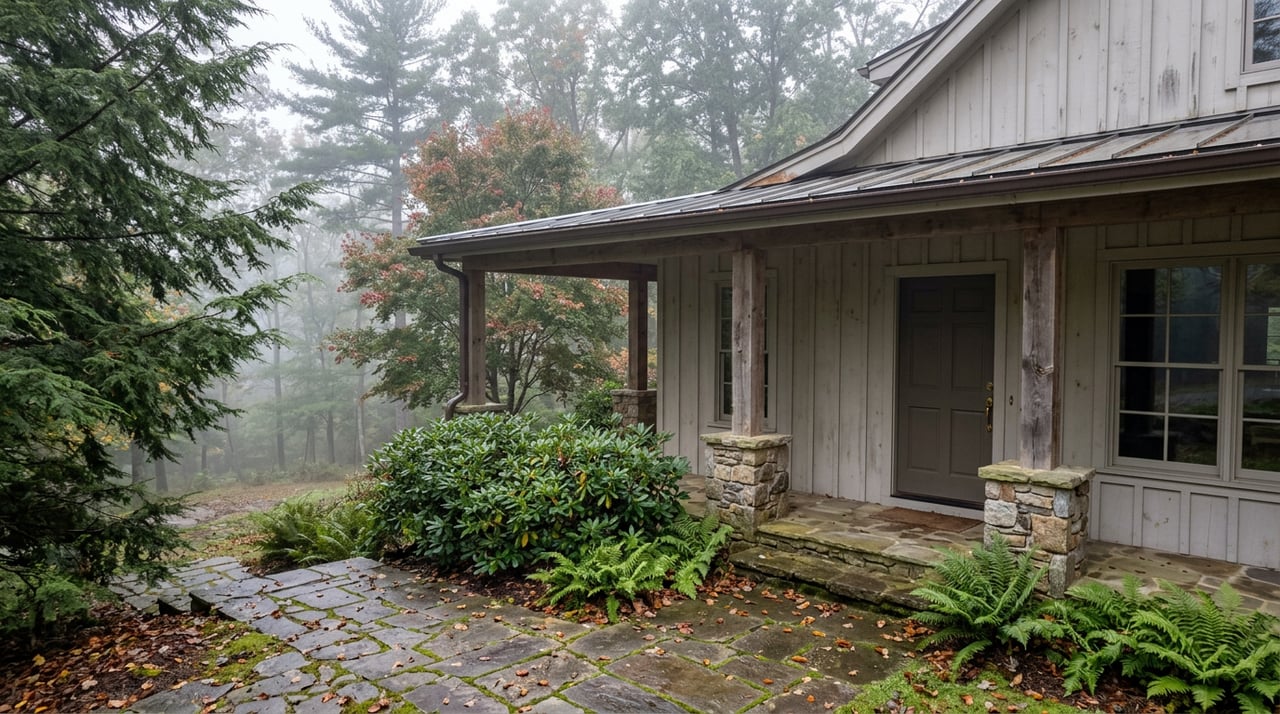
What Actually Stalls a Burnsville Septic Inspection (It's Rarely the Tank)
September 17, 2026
September 17, 2026
Ask a Yancey County closing attorney what kills a deal at the last minute, and the answer is almost never "the septic system failed." It's a permit nobody can find. A bedroom that got added without anyone telling the county. A treatment system that quietly needed renewal five years ago and nobody noticed until the inspector asked for the paperwork.
If you're buying or selling a home with a septic system in Burnsville, that distinction matters more than it sounds like it should. North Carolina has required a point-of-sale septic inspection for real estate transactions since 2008, and the inspector has to hold NCOWCICB certification, not just be a general home inspector with a flashlight. That part is the same whether the home sits in the Piedmont or up a gravel road off the Cane River. What's different here is what the inspector is actually likely to find, and why the paper trail on a mountain property is thinner than almost anywhere else in the state.
Every legally installed septic system in North Carolina exists because of three sequential permits: an Improvement Permit that confirms the soil and site can support a system, a Construction Authorization that lets the system get built, and an Operation Permit that gets issued once the county has inspected the finished work. Skip a step, and you don't have a legally operating system, no matter how well it's been treating wastewater for the past twenty years.
For Yancey County properties, those records live with the Toe River Health District, which also covers Mitchell and Avery counties. Their own guidance notes that well and septic permits are typically valid for five years from the date of issuance, which lines up with something worth remembering later in this piece.
Here's the part that catches people off guard: a lot of Burnsville-area homes sit on family land, or started as cabins built decades ago, long before anyone thought to keep a folder of permits in a fire safe. Local septic contractors who work this ground describe long gravel driveways, tanks buried on grades with no records at all, and second homes that sit empty for stretches at elevation. None of that means the system is bad. It means the paperwork that proves it's legal might not exist, and reconstructing it takes time you don't have once you're already under contract.
Not every septic system in North Carolina carries an expiration date. Conventional systems and low-pressure pipe systems, classified as Type I through Type IV, get a permanent Operation Permit once they pass final inspection. But advanced treatment systems, Type V and Type VI, have to renew that permit every 60 months, and renewal requires a documented professional inspection, not just an owner's word that things are working fine.
This is where Burnsville's terrain changes the math. The 18 mountain counties in western North Carolina, Yancey included, operate under a distinct set of environmental rules because the ground itself won't cooperate with a standard gravity-fed system. Soil depth on mountain slopes here rarely exceeds 18 inches before hitting bedrock, which means engineered alternative systems, the very Type V and VI systems with the 60-month clock, are the norm rather than the exception on a lot of Yancey County properties. A buyer moving from a flatter part of the state might never think to ask whether a permit has lapsed, because where they came from, it usually can't.
Terrain doesn't just determine which system type a property needs. It determines what that system costs to install or repair, and the spread between counties is not small. Conventional systems in Cherokee County, where the terrain rolls rather than climbs, run $3,000 to $4,500. Move into Buncombe County, whose steep slopes and shallow bedrock closely resemble what you'll find around Mount Mitchell and the Black Mountains, and conventional installations run $6,000 to $12,000, with advanced systems reaching $10,000 to $25,000.
Yancey County shares Buncombe's terrain profile, not Cherokee's. The same crystalline bedrock, the same thin soils, the same steep grades that make excavation slow and equipment access difficult. That's useful context if you're comparing a repair estimate here against something a friend paid in a different part of the state. The number that surprises people isn't wrong. It's just describing a different mountain.
| Terrain type | County example | Conventional system | Advanced/engineered system |
|---|---|---|---|
| Rolling terrain | Cherokee | $3,000–$4,500 | Rarely required |
| Steep, shallow-bedrock terrain (comparable to Yancey) | Buncombe | $6,000–$12,000 | $10,000–$25,000 |
A point-of-sale septic inspection in North Carolina typically costs $400 to $600, but in mountain counties, expect $450 to $700 given the added terrain and travel time to reach rural properties. For that fee, a certified inspector is looking for a specific set of red flags, and any one of them can slow a closing:
None of these automatically kill a sale. A failed inspection is a negotiating point, not a dead deal. Minor findings might cost a few hundred dollars to resolve. Major ones, like a full drain field failure or a non-compliant system, can run $1,500 to $30,000 or more, and that's the number both sides usually start negotiating around rather than walking away over.
A few steps before listing can save real time and money later.
North Carolina law also requires you to disclose any known defects on the Residential Property Disclosure Statement. If you know the system has an issue, that has to be on paper before you list, not something the buyer discovers during due diligence.
If you're relocating to Burnsville from somewhere with municipal sewer, or from a part of North Carolina with flatter, deeper soil, the septic inspection can feel like a formality until it isn't. Build in extra time for the inspection itself given mountain access, and don't assume a repair estimate you've seen quoted elsewhere applies here. Terrain changes the number.
It's also worth knowing that standard homeowner's insurance typically excludes septic damage from flood events, and some mountain homeowners faced $15,000 to $30,000 in replacement costs with no coverage after recent storms. In April 2026, FEMA announced more than $26 million in buyout funding for homes across three western North Carolina counties, including 53 properties in the Burnsville and Green Mountain communities damaged by flood and landslide. If a property you're considering sits in a flood-prone area, that history is worth understanding before you assume the septic system escaped unaffected.
Does North Carolina require a septic inspection to sell a home? Not by statute, but point-of-sale inspections have been effectively mandatory since 2008 because lenders require them as a loan condition, and the inspector must hold NCOWCICB certification.
How long is a septic Operation Permit valid in Yancey County? It depends on the system type. Conventional systems (Type I through IV) get a permanent permit. Advanced treatment systems (Type V and VI), common on mountain properties with shallow soil, require renewal every 60 months.
Who handles septic permit records for Burnsville-area properties? The Toe River Health District covers environmental health for Yancey, Mitchell, and Avery counties, including septic permit records and applications.
Whether you're preparing to list a family cabin or trying to understand what a septic inspection will actually turn up before you make an offer, it helps to have someone walk the property with you who knows which questions the terrain here tends to raise. That's the kind of groundwork Alli Buchanan works through with buyers and sellers across Yancey County every day. Let's Connect.
Stay up to date on the latest real estate trends.
Whether buying, selling, or relocating, partner with Alli for local expertise, honest guidance, and dedicated support from consultation to closing.