The Moon Rule That Decides Whether Burnsville's Star Parties Happen This Month
October 1, 2026
October 1, 2026
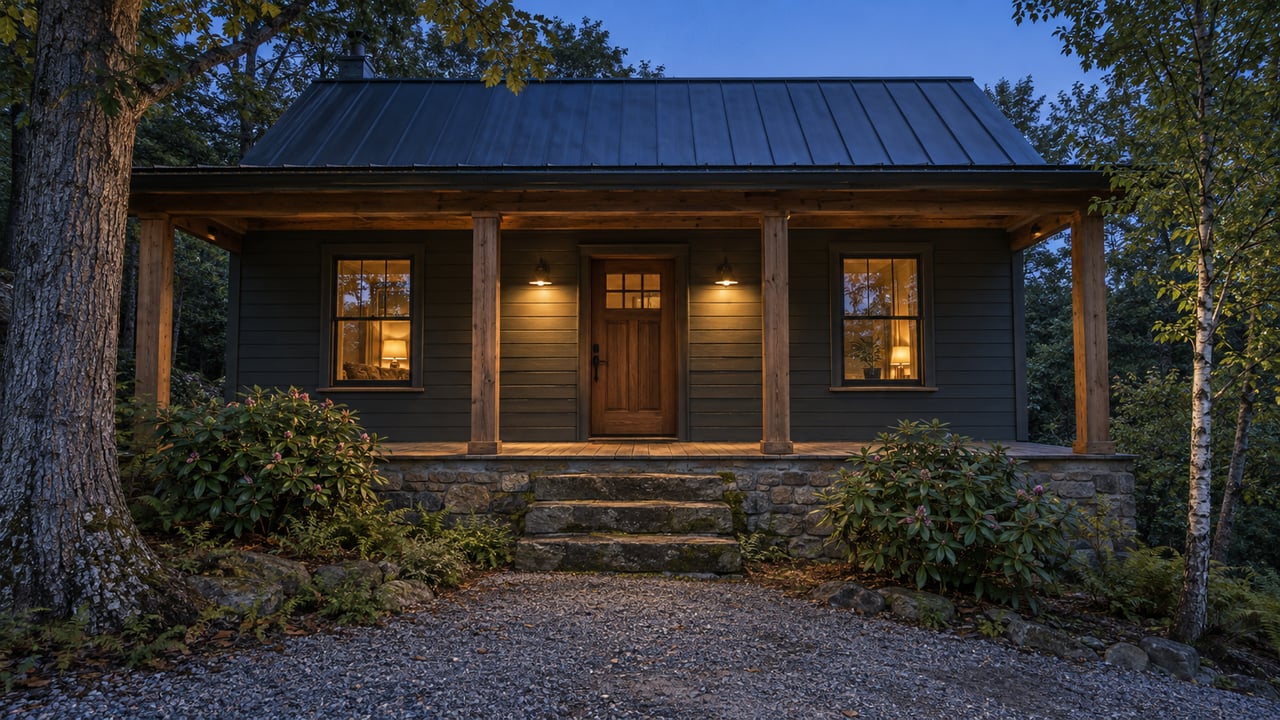
On a clear Friday night on Energy Exchange Drive, cars turn off Highway 19E and climb a steep, winding road to a gravel lot at 2,736 feet. From up there the horizon opens in every direction, no streetlight glow, no valley haze, just the kind of dark that made this ridge one of the first places in the entire Southeast to earn an International Dark Sky Park certification. Most nights that darkness is the whole point. But once a month, Mayland Community College checks something before it checks the forecast, and that single number decides whether the Bare Dark Sky Observatory opens its telescopes to the public at all.
That number isn't cloud cover. It's the moon.
Ask most people what could cancel a stargazing night and they'll say rain, or fog, or a wall of clouds rolling over the ridge. Those things do shut down a Community Viewing Night at the observatory, but they're not the strictest gatekeeper. According to the observatory's own visitor FAQ, once the moon is more than 50 percent full, Mayland cancels its regular Community Viewing Nights outright. The reasoning is simple once you hear it: the whole draw of a certified dark sky site is a black background, and a half-lit moon throws enough reflected light to wash out the faint galaxies, nebulae, and star clusters the 34-inch telescope inside the building was built to reveal. A cloudy sky is a maybe. A bright moon is a no, and it's a no you can see coming weeks in advance on a lunar calendar, long before anyone checks a weather app.
That's the part that surprises newcomers. Weather cancellations happen the night of, with an email 24 to 36 hours out. The moon cancellation is baked into the schedule before tickets ever go on sale.
Here's where it gets interesting. The nights the observatory won't run its normal program are the exact nights it schedules something else entirely. Mayland runs recurring events called Moon Madness, built specifically around a bright, high moon, where visitors point the telescopes at lunar craters instead of deep space. A June Moon Madness ran this year, one of several the observatory schedules across the calendar. The same brightness that shuts one program down opens another. It's not a workaround so much as an admission that a big glowing moon overhead is still worth a trip up the mountain, just for a different kind of looking.
The moon rule sits inside a bigger scheduling pattern that catches even regular visitors off guard. During summer and early fall, the observatory runs on a monthly ticketed cadence, one Community Night release at a time through Eventbrite. During late fall, winter, and spring, that flips to a standing Friday and Saturday night schedule instead, weather and moon phase permitting either way.
That switch matters if you're timing a visit around leaf season, since the exact week the schedule flips from one ticketed night a month to a standing Friday and Saturday lineup isn't published as a fixed date, it moves with the season itself. Either way, each session still caps out at 26 guests, the maximum the observatory can seat around its two telescopes at once. A small cap means better odds on a Friday or Saturday than on a single monthly release, but no guarantee, especially on a weekend with a new moon and a clear sky, which is exactly the combination everyone wants.
The main draw is a telescope with a name: the Sam Scope, an f/3.6 StarStructure Newtonian with a 34-inch mirror, funded by the Samuel L. Phillips Family Foundation and named in memory of Samuel Phillips. It's the largest telescope in the Southeast dedicated to public use, paired inside the same building with a 14-inch Meade telescope for planetary viewing. Next door sits the Glenn and Carol Arthur Planetarium, a 36-foot projection dome that runs its own weekly shows independent of what's happening outside, and steps in as the rain and cloud backup, projecting a live simulation of whatever sky guests would have seen if the weather had cooperated.
The observatory itself carries the name of two of its founding donors, Warren and Larissa Bare, and its dark sky designation didn't happen by accident. The Blue Ridge Astronomy Group, a local amateur astronomy club, pushed Mayland's application through the International Dark-Sky Association's certification process, resulting in the first IDA-certified Star Park anywhere in the southeastern United States.
The ridge itself has a longer story than the telescope does. Back in the 1800s this same high ground was a working mica mine, the kind of operation that gave the nearby town of Micaville its name and still leaves shards visible in the right afternoon light. Long after the mining stopped, the site became a landfill, capped and left alone until the 1990s, when an arts community called EnergyXchange moved in and figured out how to heat kilns and greenhouses using methane collected from the buried trash below.
When that methane supply ran dry in 2003, Yancey County offered Mayland Community College a free lease on the land. Amateur astronomers from the college started hauling their own equipment up to the ridge, drawn by the unobstructed 360-degree view and the near total absence of light pollution below. That informal habit is what eventually became the Bare Dark Sky Observatory, and it's why the park still shares its entrance today with the Yancey/Mitchell Transfer Station next door. When the shared gate is closed and no one's staffing the park, visitors are still allowed onto the grounds under IDA rules, they just park outside and walk around it on foot.
A few practical things worth knowing before you buy a ticket or plan a walk-up visit after hours:
The observatory also anchors one fixed date every spring, the NC SciFest Statewide Star Party, which ran its ninth consecutive year this past April. Between that, the shifting fall and winter schedule, and a moon calendar that quietly overrules the whole thing once a month, checking the sky above Burnsville turns out to be less about luck and more about knowing which calendar to check first.
If you're already keeping an eye on the ridge above Energy Exchange Drive, come talk mountains, land, and dark skies with Alli Buchanan. Let's Connect.
Stay up to date on the latest real estate trends.
Whether buying, selling, or relocating, partner with Alli for local expertise, honest guidance, and dedicated support from consultation to closing.